** according to Freddie Mac ** .** based on week??s average with 1pt **
30-yr Fixed ?Lower
This Week: 5.38% Last Week: 5.59% 1yr Ago: 6.42%
15-yr Fixed ? Lower
This Week: 4.89% Last Week: 5.06% 1yr Ago: 5.93%
Highlight of This Week?s Major Economic Reports
As the economy tries to fight its way out of the recession and no Fed intervention in sight, investors are becoming concerned over the record-setting supply of Treasuries in the market, which is what had driven rates up in recent weeks. Demand for US debt in the most recent auction held steady, however, and this helped rates make up some of the increase we had seen in the previous week.
Additionally, “Reports of benign inflation figures reversed the upward trend of mortgage rates this week,” according to Freddie Mac. “The producer price index rose only 0.2% in May, roughly a third less than the consensus forecast and the consumer price index increased by just 0.1%. Moreover, the 12-month drop of 5.0% in producer prices was the largest since 1949 and the 1.3% yearly decrease in consumer prices the biggest since 1950.”
What to Look for Next Week
All eyes will be on the Fed. They are expected to keep interest rates unchanged, but the focus will be on their statements, as many are expecting for them to start raising interest rates soon, since the recession is expected to come to an end later this year.
Uncle Sam will be selling off more debt, and foreign investor demand (or lack thereof) can have a big impact on what mortgage rates do in the near term.
Short-Term Rate Outlook
Stable to Slightly Higher
Stay Informed: What’s in the News
“Unemployment Rates Continue Rising” from Austin American-Statesman
The job market in Texas remains weak and could deteriorate as the year progresses, but Wells Fargo Economics Group Senior Economist Eugenio Alemán expects manufacturing firms to start showing growth within the next six months.
The Austin-area economy has stopped declining and might be ready for a gradual recovery in the next year. The unemployment rate rose to 6.4 percent in April, but Central Texas has had continued job growth thus far.
The Dallas unemployment rate hit a 31-year high in March of 7.2 percent. Meanwhile, Fort Worth is expected to break its previous record (set in 1992) of 7.6 percent unemployment. Alemán predicts a recovery "well into 2010."
The Houston economy "went into shock" in September 2008 when oil prices dropped. Median home prices have fallen 8 percent, and the unemployment rate is expected to rise to 7.4 percent.
The San Antonio economy is "doing relatively well," says Alemán. The unemployment rate could hit 7 percent by year's end, however, and the recession has left no sector untouched.
“Texas Ranks First for Business” from Austin American-Statesman
Texas stands out as the top state for business, according to Directorship magazine. Texas "has a pro-business tax climate that ranks third, a low cost of living, a relatively solid economy and a litigation environment that ranks tenth on our list," the magazine reported. "Texas also ranks first in the number of Fortune 500 companies located there."
Major corporate relocations and expansions such as Comerica's move to Dallas and Caterpillar's new plant in Seguin were highlighted as reasons for Texas' ranking.
Directorship evaluated states' overall economies, tax climates, cost of living and education to determine rankings.
“Texas Quick to Bounce Back from Recession” from Forbes
Several Texas cities are poised for a quick recovery from the national recession, according to Forbes.
Austin–Round Rock ranked first on the magazine’s recent list of ten cities most likely to bounce back quickly. Meanwhile, San Antonio ranked fifth, Dallas–Fort Worth–Arlington seventh and McAllen-Edinburg-Mission ninth.
To compile its list, Forbes looked at estimates from Moody's Economy.com of the projected gross domestic product of metropolitan areas across the United States, as well as unemployment figures from the Bureau of Labor Statistics and home prices, incomes and affordability data from the National Association of Home Builders.
Forbes also put together a list of ten worst cities for recession recovery. No Texas cities made that list.
“Texas Still Buyer’s Market” from Texas A&M Real Estate Center
Despite rising foreclosure rates in the United States (now nearly 32 percent), the rate in Texas is down 14 percent since last year.
Jim Gaines, research economist with the Real Estate Center at Texas A&M University, said the Texas housing market is doing very well compared with the rest of the nation.
"We're being compared to large, high-growth states like Florida, New York, California and Illinois, and our housing market is in much better shape. This is partly because about four or five years ago, we didn't have the big run-up in prices that many of those states had," Gaines said.
Texas also benefits from a lack of overbuilding, which often creates an excess of inventory to drive down home prices. Affordable homes, low mortgage and interest rates, and first-time homebuyer tax credits also make this an ideal time to buy a home, according to Gaines.
Sweet is the smile of home; the mutual look, when hearts are of each other sure. -- John Keble
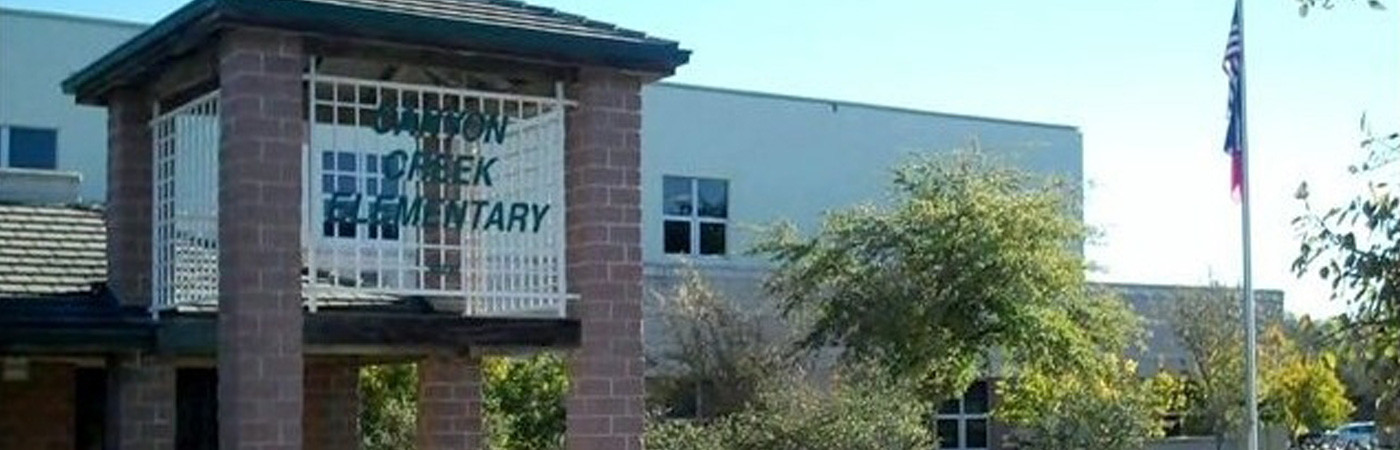
Canyon Creek is compliments of:
Dorie and Gene Dillard 'Your Perfect Partners'
Dorie and Gene Dillard 'Your Perfect Partners', GRI,CRS,ABR Coldwell Banker United, REALTORS®
9442 N. Cap of Tx Hwy, Arboretum Bldg. 1 Suite #600
Austin, TX 78759